
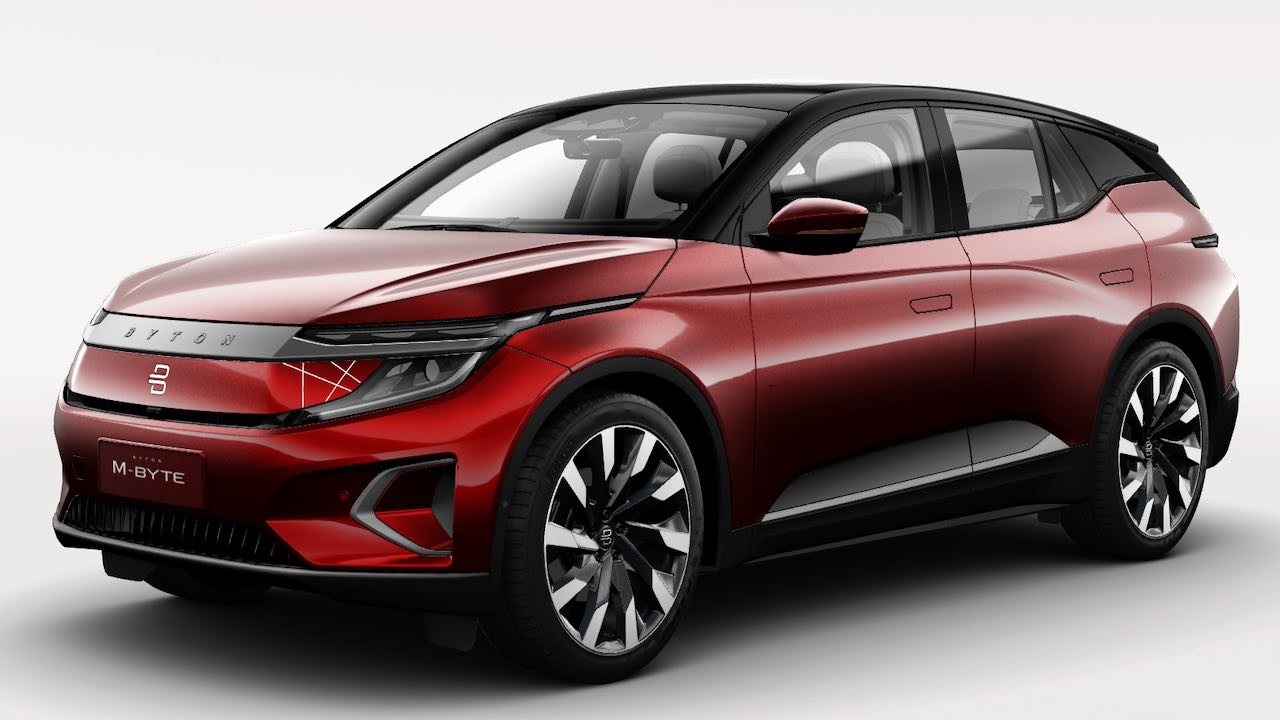
Imagine a world where your car isn't just a way to get from point A to point B, but a connected hub, a personal space on wheels. The Byton M-Byte promised to be just that, a revolutionary electric SUV packed with cutting-edge technology and a truly unique interior. It was poised to disrupt the EV market, but what exactly did it offer, and where did it ultimately land?
For many, the excitement surrounding the M-Byte was tempered by uncertainty. Questions about range, reliability, and the long-term viability of the company lingered. The automotive landscape is fiercely competitive, and new entrants face an uphill battle to establish themselves and gain consumer trust. The ambition was clear, but the path to production was fraught with challenges.
This comprehensive guide is for anyone who was intrigued by the Byton M-Byte, whether you were an early adopter, a tech enthusiast, or simply curious about the future of electric vehicles. We'll delve into the M-Byte's specifications, explore its innovative features, and shed light on its intended pricing, giving you a complete picture of what this groundbreaking SUV aimed to achieve.
Get ready to explore the visionary Byton M-Byte electric SUV! We'll uncover its ambitious specifications, unique features, and intended pricing, giving you a complete overview of this innovative, albeit ultimately unrealized, EV. We'll explore key terms like "electric SUV," "range," "infotainment system," and "autonomous driving features" to provide a thorough understanding of the M-Byte's potential impact on the automotive world. Ultimately, we'll discuss why this promising vehicle never made it to mass production.
Byton M-Byte: A Glimpse into the Future?
The target of this section is to understand the Byton M-Byte's initial vision and the potential it held for the future of electric vehicles. It explores the design philosophy, the technological innovations it aimed to introduce, and the overall impact it could have had on the automotive industry, particularly in the realm of electric SUVs.
I remember first seeing the concept images of the Byton M-Byte and being utterly captivated. That massive, curved display stretching across the dashboard felt like something straight out of a science fiction movie. It wasn't just a screen; it was a statement, a bold declaration of a future where our cars are deeply integrated with our digital lives. At the time, I was driving a fairly conventional sedan, and the M-Byte felt like a leap forward, a glimpse into a world of seamless connectivity and personalized driving experiences.
The promise of the M-Byte wasn't just about the size of the screen, though. It was about the entire philosophy behind it. Byton envisioned the car as a "smart device on wheels," a mobile living room where you could work, play, and connect with the world around you. They emphasized user experience, creating an interface that was intuitive and engaging. The idea of having access to entertainment, navigation, and vehicle controls all in one centralized location was incredibly appealing.
Furthermore, the M-Byte aimed to compete in the burgeoning electric SUV market, offering a compelling alternative to established players like Tesla. Its focus on technology, combined with a spacious interior and a potentially competitive price point, made it a serious contender. The M-Byte was poised to democratize advanced features and make the electric driving experience more accessible to a wider range of consumers. It showcased a vision of the future where electric cars are not just environmentally friendly, but also incredibly smart and enjoyable to drive.
Decoding the Specs: Power and Performance
This section aims to provide a detailed breakdown of the Byton M-Byte's technical specifications, including its battery capacity, range, motor configuration, and performance figures. It delves into the engineering aspects of the vehicle, offering a technical understanding of its capabilities and limitations, helping readers assess its potential as a viable electric SUV.
At the heart of the Byton M-Byte was its electric powertrain. Two battery options were planned: a 72 k Wh pack providing a range of approximately 224 miles (360 km) and a larger 95 k Wh pack targeting a range of 280 miles (450 km). These figures placed the M-Byte squarely in the competitive zone for electric SUVs, though real-world range would likely vary depending on driving conditions and habits.
The M-Byte was intended to be available in both rear-wheel-drive and all-wheel-drive configurations. The rear-wheel-drive model would feature a single electric motor producing around 272 horsepower, while the all-wheel-drive version would boast two motors, delivering a combined output of approximately 408 horsepower. This would translate to a 0-60 mph acceleration time of around 5.5 seconds for the all-wheel-drive model, making it a reasonably quick and responsive SUV.
Beyond the numbers, Byton also emphasized the M-Byte's charging capabilities. It was designed to support fast charging, allowing for an 80% charge in roughly 35 minutes using a DC fast charger. This would be crucial for long-distance travel, minimizing downtime and making the M-Byte a more practical option for everyday use. The combination of a decent range, respectable performance, and fast charging capabilities made the M-Byte a promising contender in the electric SUV market.
The Byton Story: From Ambition to Uncertainty
The goal here is to explore the history of Byton as a company, tracing its origins, its ambitious goals, and the challenges it faced along the way. It examines the factors that contributed to its eventual downfall, providing context for understanding why the M-Byte never reached its full potential. It serves as a cautionary tale about the complexities of entering the automotive industry, especially in the rapidly evolving electric vehicle sector.
Byton emerged in 2017, backed by Chinese investors and a team of experienced automotive executives. They aimed to create a premium electric vehicle brand that would rival Tesla and other established players. Their vision was bold: to build "the next generation of smart devices on wheels." The M-Byte was intended to be the flagship vehicle, showcasing their innovative technology and design.
The company initially garnered significant attention and praise for its forward-thinking approach and its commitment to user experience. The M-Byte's unveiling at CES in 2019 generated considerable buzz, with many impressed by its massive display screen and its focus on connectivity. However, behind the scenes, Byton faced significant financial challenges. The development and production of a new vehicle is an incredibly expensive undertaking, and Byton struggled to secure the necessary funding.
As the company's financial woes deepened, production delays mounted, and the M-Byte's launch date was repeatedly pushed back. Eventually, Byton suspended operations in 2020, effectively bringing the M-Byte project to a halt. While there have been attempts to revive the company and bring the M-Byte to market, its future remains uncertain. The Byton story serves as a reminder of the immense challenges involved in launching a new electric vehicle brand, highlighting the importance of financial stability and effective execution.
Hidden Features of the M-Byte: Beyond the Screen
This section uncovers some of the less-publicized but equally intriguing features of the Byton M-Byte, focusing on aspects beyond the prominent dashboard display. It explores advanced driver-assistance systems, connectivity options, and unique design elements that contributed to the vehicle's overall appeal, providing a more comprehensive understanding of its potential capabilities.
While the massive dashboard display was undoubtedly the M-Byte's most eye-catching feature, it was far from the only innovation on offer. Byton also planned to incorporate a suite of advanced driver-assistance systems (ADAS), including adaptive cruise control, lane-keeping assist, and automatic emergency braking. These features would enhance safety and convenience, making the M-Byte a more comfortable and secure vehicle to drive.
Furthermore, Byton placed a strong emphasis on connectivity, integrating the M-Byte with a wide range of online services and applications. The vehicle would support over-the-air software updates, allowing for continuous improvement and the addition of new features over time. It would also offer seamless integration with smartphones and other devices, allowing drivers to access their favorite apps and services from the car's infotainment system.
Beyond the technology, the M-Byte also featured a number of unique design elements. The interior was designed to be spacious and comfortable, with premium materials and a minimalist aesthetic. The exterior was sleek and aerodynamic, with distinctive lighting signatures that set it apart from other SUVs. These hidden features, combined with the M-Byte's headline-grabbing display, contributed to its overall appeal and its potential to disrupt the electric vehicle market.
Is the Byton M-Byte Still Worth Considering? (Hypothetically)
This section offers a hypothetical recommendation, exploring the potential value of the Byton M-Byte if it were still available for purchase. It weighs the vehicle's strengths and weaknesses, considering its intended features, performance, and pricing, providing a balanced assessment of its appeal to potential buyers in today's electric SUV market.
Even though the Byton M-Byte never made it to mass production, it's still worth considering hypothetically. If it were available today, it would offer a compelling blend of technology, comfort, and performance. Its massive dashboard display would undoubtedly be a major selling point, attracting buyers who value cutting-edge infotainment systems. Its spacious interior and comfortable ride would also appeal to families and those who prioritize practicality.
However, the M-Byte would also face stiff competition from established electric SUVs like the Tesla Model Y, the Ford Mustang Mach-E, and the Hyundai Ioniq 5. These vehicles offer proven reliability, extensive charging networks, and strong brand recognition. The M-Byte would need to be priced competitively and offer a truly unique value proposition to stand out in this crowded market.
Ultimately, the decision of whether or not to consider the Byton M-Byte would depend on individual priorities. If you're a tech enthusiast who values innovation and are willing to take a risk on a new brand, the M-Byte could be an appealing option. However, if you prioritize reliability, practicality, and a proven track record, you might be better off sticking with established electric SUV models.
Understanding the M-Byte's Target Audience
This section dives deeper into the intended target audience for the Byton M-Byte, exploring their demographics, psychographics, and lifestyle preferences. It analyzes the marketing strategies Byton employed to reach this audience, providing insights into their efforts to position the M-Byte as a desirable and aspirational electric SUV. It's important to understand who Byton was trying to reach, as this shapes our understanding of the car's design and features.
Byton aimed to attract a tech-savvy and affluent demographic with the M-Byte. Their target audience consisted of early adopters who were passionate about technology and eager to embrace new innovations. These individuals were likely to be urban dwellers with a high disposable income, seeking a vehicle that reflected their forward-thinking mindset and their commitment to sustainability.
Byton's marketing strategy focused on highlighting the M-Byte's cutting-edge technology, its sleek design, and its commitment to user experience. They emphasized the vehicle's connectivity features, its advanced driver-assistance systems, and its spacious and comfortable interior. They also sought to create a sense of exclusivity and aspiration around the Byton brand, positioning the M-Byte as a premium electric SUV that would appeal to discerning consumers.
Furthermore, Byton targeted individuals who were looking for a more engaging and personalized driving experience. The M-Byte's massive dashboard display and its intuitive interface were designed to make driving more enjoyable and productive. The vehicle's connectivity features allowed drivers to stay connected to their digital lives while on the road, making the M-Byte a true "smart device on wheels."
Tips for Navigating the Electric SUV Market (Even Without the M-Byte)
This section provides practical tips for navigating the electric SUV market, even in the absence of the Byton M-Byte. It offers advice on researching different models, comparing specifications, evaluating charging options, and considering long-term ownership costs, empowering readers to make informed decisions when choosing an electric SUV that meets their needs.
The electric SUV market is booming, with a wide range of models available from various manufacturers. Before making a purchase, it's essential to do your research and compare different options. Consider factors such as range, performance, charging capabilities, safety features, and overall cost of ownership.
Pay close attention to the battery capacity and the estimated range of each vehicle. Real-world range can vary depending on driving conditions and habits, so it's important to factor this into your calculations. Also, consider the availability of charging stations in your area and the charging speed of different models.
Don't forget to evaluate the long-term ownership costs, including maintenance, insurance, and electricity consumption. Electric vehicles typically have lower maintenance costs than gasoline-powered cars, but it's still important to factor these expenses into your budget. By doing your homework and comparing different options, you can find an electric SUV that meets your needs and fits your budget.
The Importance of Charging Infrastructure
This section further emphasizes the critical role of charging infrastructure in the adoption of electric vehicles. It explores the different types of charging stations, the availability of charging networks, and the impact of charging speed on the overall ownership experience. It highlights the importance of considering charging options when choosing an electric SUV, ensuring a convenient and hassle-free ownership experience.
One of the biggest hurdles to electric vehicle adoption is the lack of widespread charging infrastructure. While the number of charging stations is growing rapidly, it's still not as convenient as filling up with gasoline. When choosing an electric SUV, it's essential to consider the availability of charging stations in your area, especially if you plan on taking long trips.
There are three main types of charging stations: Level 1, Level 2, and DC fast chargers. Level 1 chargers are typically found in homes and provide a slow charging speed. Level 2 chargers are more common in public places and offer a faster charging speed. DC fast chargers are the fastest type of charger and can add significant range in a short amount of time.
The charging speed of an electric SUV is also important to consider. Some models can charge much faster than others, which can significantly reduce the amount of time you spend waiting at a charging station. By considering the availability of charging stations and the charging speed of different models, you can ensure a convenient and hassle-free ownership experience.
Fun Facts About the Byton M-Byte
This section presents some interesting and lesser-known facts about the Byton M-Byte, adding a touch of entertainment and further enriching the reader's understanding of the vehicle. These fun facts can include details about its design, technology, or the company behind it, making the article more engaging and memorable.
Did you know that the Byton M-Byte's massive dashboard display was originally intended to be even larger? The initial design called for a screen that stretched from door to door, but this was ultimately deemed impractical. The production version still featured a massive 48-inch display, which was one of the largest in the automotive industry.
Another fun fact is that Byton partnered with Amazon to integrate Alexa voice assistant into the M-Byte. This would have allowed drivers to control various vehicle functions, such as navigation and music playback, using voice commands. The Alexa integration would have also enabled drivers to access a wide range of Amazon services from the car's infotainment system.
Finally, Byton's headquarters were located in Nanjing, China, but the company also had offices in Silicon Valley, Munich, and Hong Kong. This global presence reflected Byton's ambition to become a global player in the electric vehicle market. The company's diverse team of engineers and designers brought together expertise from around the world to create the M-Byte.
How To (Hypothetically) Buy a Byton M-Byte
This section, while hypothetical, humorously outlines the (non-existent) steps involved in purchasing a Byton M-Byte. It plays on the anticipation and excitement that surrounded the vehicle's initial unveiling, providing a lighthearted and imaginative scenario for acquiring this elusive electric SUV.
Alright, let's pretend for a moment that the Byton M-Byte is actually available for purchase. What would the process look like? First, you'd probably head over to the Byton website, which, for the sake of this exercise, is fully functional and teeming with information. You'd browse the different configurations, selecting your preferred battery size, motor setup, and color scheme.
Next, you'd likely be prompted to reserve your M-Byte with a deposit. This would secure your place in line and give you access to exclusive updates on the vehicle's production progress. You might even receive a personalized invitation to visit the Byton factory in China for a behind-the-scenes tour.
Finally, after months of anticipation, your M-Byte would arrive at your local dealership. You'd complete the purchase paperwork, take a test drive, and marvel at the massive dashboard display. As you drive off into the sunset, you'd feel like you're driving the future, even though it's a future that, in reality, never quite materialized.
What If... The Byton M-Byte Had Succeeded?
This section explores a hypothetical scenario: what if Byton had overcome its challenges and successfully launched the M-Byte? It examines the potential impact the vehicle could have had on the electric SUV market, the automotive industry as a whole, and the broader adoption of electric vehicles, offering a thought-provoking glimpse into an alternate reality.
Imagine a world where Byton had navigated the treacherous waters of the automotive industry and successfully launched the M-Byte. How would the electric SUV market look today? For starters, we might see more manufacturers prioritizing user experience and connectivity, inspired by the M-Byte's innovative dashboard display. The M-Byte's focus on creating a "smart device on wheels" could have spurred a wave of innovation in automotive infotainment systems.
Furthermore, a successful Byton might have accelerated the adoption of electric vehicles by making them more appealing to a wider range of consumers. The M-Byte's spacious interior, comfortable ride, and advanced technology could have convinced some hesitant buyers to make the switch to electric.
Of course, it's impossible to say for sure what impact the M-Byte would have had on the world. But one thing is certain: its ambitious vision and its innovative technology had the potential to change the electric SUV market for the better. The Byton M-Byte, though unrealized, remains a testament to the power of innovation and the potential of electric vehicles to transform the way we drive.
Top 5 Standout Features of the Byton M-Byte
This section presents a concise listicle highlighting the top 5 most noteworthy features of the Byton M-Byte. These features can range from its technological innovations to its design elements, providing a quick and engaging overview of the vehicle's key selling points and its potential appeal to consumers.
Here are the top 5 standout features of the Byton M-Byte:
- The Massive Dashboard Display: The M-Byte's 48-inch curved display was undoubtedly its most eye-catching feature, offering a seamless and immersive infotainment experience.
- Advanced Driver-Assistance Systems: The M-Byte was planned to feature a suite of ADAS technologies, enhancing safety and convenience.
- Seamless Connectivity: The vehicle was designed to integrate seamlessly with smartphones and other devices, providing access to a wide range of online services.
- Spacious and Comfortable Interior: The M-Byte's interior was designed to be both luxurious and practical, with plenty of room for passengers and cargo.
- Sleek and Aerodynamic Exterior: The M-Byte's exterior was designed to be both stylish and efficient, with distinctive lighting signatures that set it apart from other SUVs.
Question and Answer
Q: What was the Byton M-Byte?
A: The Byton M-Byte was a planned electric SUV from Chinese automaker Byton, known for its massive 48-inch curved display spanning the dashboard.
Q: What happened to Byton?
A: Byton faced financial difficulties and suspended operations in 2020, preventing the M-Byte from reaching mass production.
Q: What were the planned specifications of the M-Byte?
A: The M-Byte was intended to have two battery options (72 k Wh and 95 k Wh), a range of up to 280 miles, and both rear-wheel-drive and all-wheel-drive configurations.
Q: Will the Byton M-Byte ever be produced?
A: The future of the Byton M-Byte remains uncertain, though there have been attempts to revive the company and bring the vehicle to market.
Conclusion of Byton M-Byte Electric SUV: Specs, Features, and Pricing
The Byton M-Byte, though ultimately unrealized, stands as a testament to the ambition and innovation that characterized the early days of the electric vehicle revolution. Its groundbreaking features, particularly the massive dashboard display, captured the imagination of many and pushed the boundaries of what was considered possible in automotive design. While the company's financial struggles prevented the M-Byte from reaching its full potential, its legacy lives on as a reminder of the importance of user experience, connectivity, and bold design in the electric vehicle market.